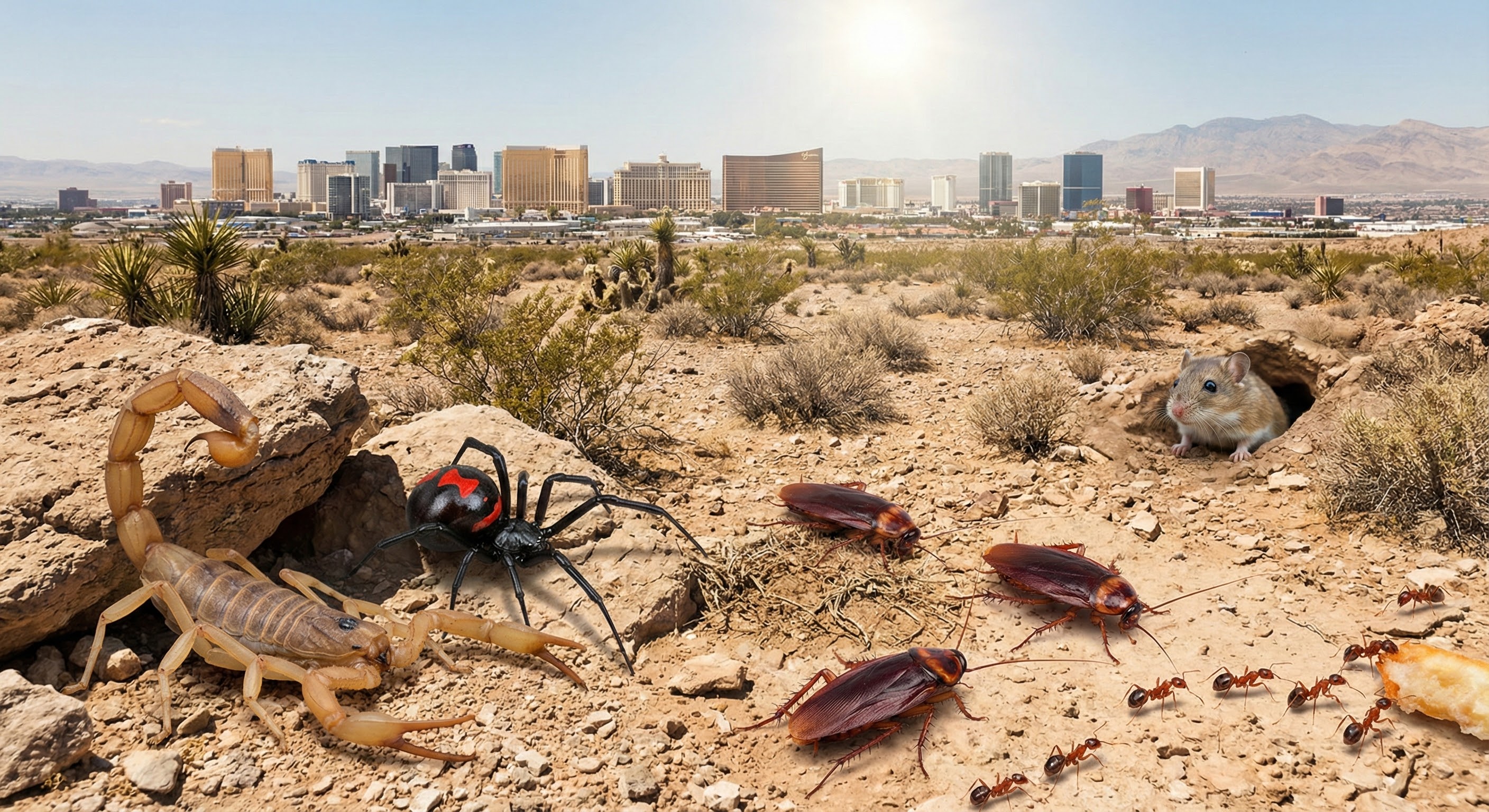
| Pest | Main Threats | Prevention Tips |
|---|---|---|
| Scorpions | Painful stings | Seal cracks, clear debris, consult professionals |
| Black Widows | Painful bites | Clean storage areas, remove outdoor clutter |
| Cockroaches | Spread diseases, trigger allergies | Clean kitchens, fix leaks, professional treatments |
| Ants | Contaminate food, structural damage | Store food properly, seal entry points, bait traps |
| Rodents | Spread diseases, chew wires | Seal gaps, secure food, act quickly |
Proactive measures like sealing cracks, reducing clutter, and maintaining cleanliness can help keep these pests out. For severe infestations, professional pest control services are often necessary.
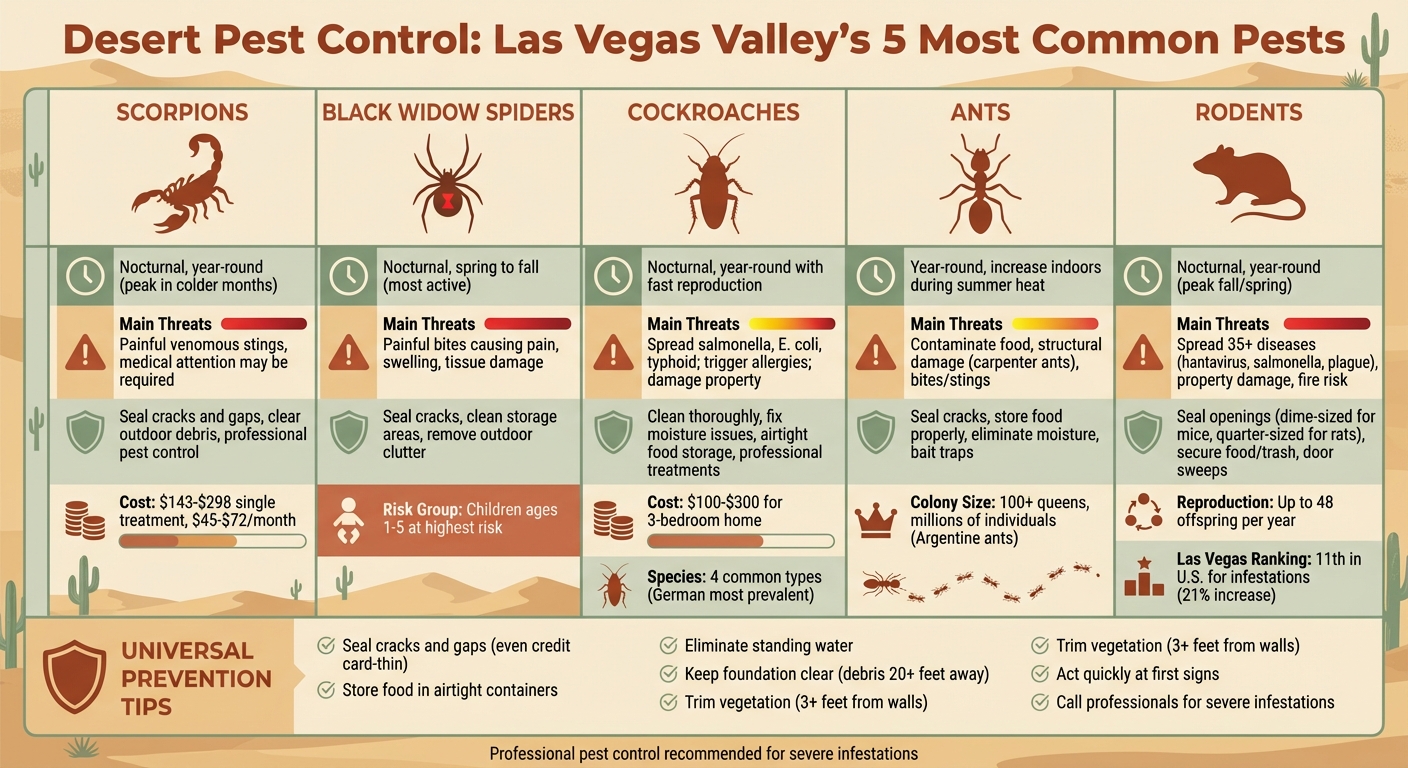
Las Vegas Valley Pest Comparison Guide: Threats and Prevention Methods
Scorpions are masters of survival in harsh desert conditions. They stay hidden during the day and come alive at night, making them nocturnal hunters. During the blazing summer months, they often seek shelter indoors to escape the intense heat.
In their natural desert surroundings, scorpions favor places like burrows, spaces under rocks, wood piles, and other debris. However, they can easily find their way into homes and businesses through unsealed gaps. Once inside, they gravitate toward dark, undisturbed corners.
"Scorpions frequently enter homes seeking shelter from the heat and sun of their desert environments."
– Rentokil – Las Vegas
The most concerning threat from scorpions is their venomous sting, which can cause intense pain and numbness. For vulnerable groups like young children, the elderly, or pets, these stings can lead to serious health complications. The Arizona Bark scorpion, one of the most common species in the region, is notorious for its extremely painful and, in some cases, potentially deadly sting . Managing these risks calls for swift and effective action.
To keep scorpions out, start by sealing cracks and gaps around your home with caulk or foam sealant. Make sure doors and windows have proper weatherstripping and secure screens. Outside, clear away yard debris, trim overgrown vegetation, and fix any leaking faucets or pipes to remove moisture that attracts scorpions and their prey. Keeping your home clutter-free also reduces potential hiding spots.
"When scorpions invade a home it requires immediate intervention by a trained professional pest company."
– Preventive Pest Control Las Vegas
For serious infestations, professional pest control services are often necessary. In Las Vegas, costs for these services range from $143 to $298 for a single treatment. Monthly services typically cost between $45 and $72, while quarterly treatments for a 1,600–2,000 square foot home range from $92 to $285.
Black widow spiders are solitary creatures that come to life at night, relying on their webs to detect movement. Their webs are messy and irregular, spun close to the ground to trap prey and protect their eggs. Since these spiders have poor eyesight, they depend entirely on the vibrations in their webs to sense activity around them.
Despite their scary reputation, black widows aren’t looking for trouble. They typically bite only when they feel cornered or threatened - like when they’re accidentally squished or disturbed.
Black widow spiders like quiet, hidden spots near the ground to set up their webs. In Las Vegas homes, they often turn up in garages, storage spaces that rarely see activity, and other tucked-away indoor areas. Outdoors, you might find them in sheds, barns, rock piles, block walls, sprinkler valve boxes, or even under patio furniture and playground equipment. They also hide among fallen branches and other clutter. Around the home’s perimeter, they might settle near woodpiles, foundations, or stacks of firewood and building materials.
To minimize encounters with these spiders, it’s a good idea to keep storage areas tidy, regularly clean and vacuum to remove webs, and store wood and materials off the ground and away from the house. Sealing cracks around doors, windows, vents, and the foundation can also prevent these spiders from sneaking in. These hidden spaces not only provide shelter for black widows but also increase the chances of running into one.
The western black widow (Latrodectus hesperus), common in the Las Vegas Valley, is infamous for its venom, which contains a powerful neurotoxin. While bites are rarely life-threatening for healthy adults, they can cause intense pain and other systemic symptoms. Young children, especially those between 1 and 5 years old, are at greater risk from these bites and should receive immediate medical care if bitten.
Cockroaches are nocturnal scavengers that prefer to stay hidden during the day in warm, dark, and damp spots like cracks, water meter boxes, sewers, and crawl spaces. At night, they come out to search for food. They’re quick to scurry away when exposed to light. What’s more, these pests are incredibly resilient - they can survive radiation levels that would be deadly to humans and are resistant to many pest control products.
In the Las Vegas Valley, four cockroach species are commonly found: American, Australian, Oriental, and German. Among these, the German cockroach is the most prevalent in homes and businesses.
Cockroaches are drawn to kitchens because they provide easy access to food, water, and warmth. Bathrooms are another hotspot, thanks to their damp and dark conditions. These pests also hide behind large appliances like refrigerators and stoves, as well as in pantries, utility closets, crawl spaces, basements, and attics - essentially any undisturbed area that meets their needs.
Cockroaches are more than just a nuisance - they’re a serious health risk. They can carry harmful bacteria and pathogens, such as salmonella and E. coli, which can contaminate food and surfaces, potentially leading to illnesses like typhoid fever. On top of that, their shed skin and saliva can trigger allergic reactions in some people. These pests even cause damage by feeding on paper products, wallpaper glue, and fabrics made from natural fibers. The warm climate in Las Vegas allows cockroaches to thrive year-round, making them particularly challenging to manage.
Keeping cockroaches out starts with removing what attracts them. A clean kitchen is key - store food in airtight containers, wash dishes promptly, and use sealed trash bins to minimize their food sources. Seal any gaps around windows, doors, and utility pipes using silicone caulking and weather stripping. To make your home less inviting, reduce indoor humidity with dehumidifiers and ensure proper ventilation in kitchens and bathrooms. Also, eliminate standing water from places like gutters, bird baths, and flower pots.
If you notice signs of cockroaches, act quickly to prevent a full-blown infestation. Professional insecticide treatments for a typical three-bedroom home usually cost between $100 and $300. Additional control methods include traps, glue boards, bait stations, and targeted insecticides. Eco-friendly options, such as Bacillus thuringiensis (Bt) or insect growth regulators, are also available. For severe infestations, professional pest control services may use a combination of strategies to ensure long-term results.
Ants are a year-round presence in the Las Vegas Valley, thriving in the desert climate. However, the extreme summer heat often drives them indoors in search of moisture and food, making homes and businesses their targets.
Some of the most common species in the area include:
Ants favor areas that provide moisture and shelter, especially as the desert heat intensifies. Indoors, they often settle in kitchens, bathrooms, or other places with consistent moisture. Outdoors, they nest in shallow soil along yard perimeters, but during drier conditions, species like Argentine ants may burrow deeper into the ground.
These pests can easily infiltrate homes and buildings through tiny cracks in foundations, gaps around windows and doors, or openings near utility lines. Once inside, they exploit any available resources, making them a persistent nuisance.
While ants might seem harmless, they can bring a host of issues to properties in Las Vegas. They’re capable of spreading bacteria and pathogens that contaminate food sources. Some species, like carpenter ants, can cause structural damage by tunneling through wood, while others may bite or sting if disturbed.
The sheer size of their colonies, combined with their ability to communicate and adapt, makes controlling infestations difficult. When threatened, colonies may split and relocate, spreading the problem further. Additionally, ants often develop resistance to over-the-counter pest control products, highlighting the need for professional intervention.
To keep ants at bay, take proactive steps such as sealing cracks, trimming vegetation near your home, repairing leaks, storing food in airtight containers, and regularly cleaning surfaces to eliminate attractants.
For more effective control, a layered approach works best in the Las Vegas Valley:
Professional pest control services can provide seasonal inspections and adjust treatments as conditions change. Acting quickly at the first sign of ant activity is crucial, as delays can lead to larger, harder-to-manage infestations. These efforts, when combined, help protect homes and businesses across the area.
In Las Vegas, the harsh desert heat drives rodents to seek refuge indoors, making homes and businesses an inviting escape. The city ranks 11th in the U.S. for rodent infestations, with a notable 21% increase in related online searches recently. Factors like warmer winters, ongoing urban expansion, and the growing popularity of food delivery services have created perfect conditions for these pests to thrive throughout the year.
Two main rodent species dominate the area: roof rats and Norway rats. Roof rats, which are smaller (10–14 inches long and weighing 5–6 ounces), are thought to have arrived via palm trees and are now the most common rodent in the city, despite not being native to Nevada. Norway rats, on the other hand, are larger and more destructive. Both species are nocturnal, so seeing one during the day could indicate a serious infestation. Their ability to reproduce quickly is concerning - one rat can produce up to 48 offspring annually, leading to rapid population growth.
As urban development encroaches on their natural habitats, rodents are increasingly moving into residential areas. Their resourcefulness is impressive - they can squeeze through openings as small as a dime for mice or a quarter for rats. Common entry points include rooflines, exterior vents, gaps in concrete, stucco cracks, and spaces around doors or pipes.
Once inside, they gravitate toward attics, walls, pantries, and other areas with easy access to food and water. In the desert environment, they're especially drawn indoors for moisture and shelter, particularly as temperatures drop. These confined spaces not only provide a haven for rodents but also heighten the risks they pose to health and property.
Rodents are more than just a nuisance - they're a serious health hazard. They can spread over 35 diseases to humans, including hantavirus, salmonella, leptospirosis, rat bite fever, typhus, and even plague. Their droppings, urine, and saliva contaminate food, and they often bring along additional pests like ticks, mites, and fleas.
Their impact on property is equally alarming. Rodents chew through electrical wiring, creating fire risks, and damage insulation in walls and attics. Norway rats, due to their size, can cause even greater destruction while spreading harmful pathogens.
To keep rodents at bay, start by sealing all possible entry points. Use materials like steel wool, caulk, hardware cloth, or copper mesh - items they can't chew through. Adding door sweeps, covering vents with screens, and reinforcing areas like spray foam with more durable materials can further fortify your home.
Take precautions with food storage by using airtight containers for both human and pet food. Clean up spills immediately, secure garbage in tightly sealed bins, and avoid leaving pet food out overnight. If you have a garden, harvest produce as soon as it's ripe to prevent attracting rodents. Regularly clean and declutter both inside and outside your home to eliminate scent trails and hiding spots.
Given their rapid reproduction and resilience, professional pest control services are often necessary for effective, long-term management. At the first sign of activity - whether it's droppings, scratching sounds, or actual sightings - act quickly to prevent a small issue from escalating into a full-blown infestation.
Here’s a handy table outlining key traits and control methods for common pests in the Las Vegas Valley. It gives you a quick overview of what to expect and how to manage these pests effectively. For more details, check the individual sections on each pest's behavior and control strategies.
| Pest | Activity Pattern | Primary Threats | Recommended Control Methods |
|---|---|---|---|
| Scorpions | Active all year; often move indoors during colder months | Painful stings that may require medical attention | Seal entry points, clear outdoor clutter, and use professional pest control for infestations |
| Black Widow Spiders | Most active from spring to fall; may seek indoor shelter in colder weather | Bites that can cause pain, swelling, and tissue damage | Seal cracks, remove outdoor debris, and consult pest control professionals for infestations |
| Cockroaches | Active year-round with fast population growth | Spread salmonella and typhoid, trigger allergies, and damage food and belongings | Keep areas clean, store food in airtight containers, fix moisture problems, and use professional treatments for severe infestations |
| Ants | Year-round activity; more noticeable indoors during wet seasons | Contaminate food and may bite or sting | Clean spills quickly, properly store food, seal entry points, eliminate moisture, and use bait traps for control |
| Rodents | Active all year, with peak activity in fall and spring | Spread diseases and cause property damage | Seal openings, secure food and trash, install door sweeps, and call professionals for infestations |
When DIY efforts aren’t enough, professional pest control is crucial to handle severe infestations effectively.
In the Las Vegas Valley, staying ahead of pests means taking proactive steps. Start by sealing even the smallest cracks - yes, even ones as slim as a credit card. Store food in airtight containers and get rid of any standing water. Outside, keep your home's foundation clear of debris, stack firewood at least 20 feet away, and trim plants so they’re at least three feet from your walls.
Maintaining both indoor and outdoor spaces is the backbone of effective pest control in this desert environment. If your DIY methods aren’t cutting it, calling in the pros can make all the difference. Pest control experts provide targeted treatments, regular monitoring, and strategies to keep desert pests at bay for the long haul.
Don’t wait for an infestation to take hold. Acting quickly helps protect your family, employees, and property from the health risks and damage caused by pests like scorpions, ants, and rodents. In this desert climate, taking swift and thorough action is your strongest line of defense.
To keep scorpions from sneaking into your home, start by sealing up any cracks or gaps around doors, windows, utility lines, and the foundation. These tiny openings are like open invitations for them. Outside, maintain a tidy yard - clear away debris, trim overgrown vegetation, and avoid leaving clutter that could serve as their hiding spots. Also, make sure to get rid of standing water, as it can attract the pests that scorpions love to eat. For an extra layer of protection, you might want to work with a professional pest control service that can apply treatments specifically designed to deal with scorpions.
Rodent infestations often leave behind some pretty clear clues. Keep an eye out for droppings near food storage areas, gnaw marks on furniture, walls, or food packaging, and unpleasant smells that might come from urine or nesting materials. You might also stumble across nests made from shredded paper or fabric, greasy rub marks along baseboards, or small chewed holes in walls and floors.
Other signs to watch for include strange scratching noises, particularly at night, or even changes in your pet's behavior - animals can sometimes pick up on rodent activity before you do. Spotting any of these indicators means it’s time to act quickly to avoid further damage and potential health concerns.
When it comes to dealing with cockroaches in an eco-friendly way, there are plenty of effective options. You can try organic pest control products, traps, or bait stations that use natural attractants like pheromones. Another smart move is sealing up entry points and using physical barriers to keep them out. If you're open to it, introducing certain beneficial insects can also help control cockroach populations naturally.
For a more comprehensive approach, consider reaching out to pest control professionals who follow Integrated Pest Management (IPM) practices. These methods prioritize targeted, low-toxicity treatments that are not only effective but also safer for the environment.